Jacob Hembrom SJ
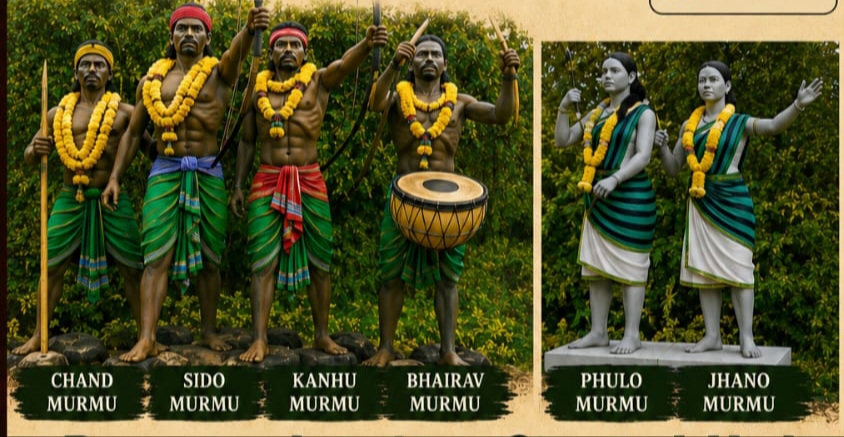
Every year on 30 June, we commemorate Hul Diwas, honouring the historic Santal uprising that began in Bhognadih, Barhait, Sahibganj, Jharkhand, in 1855 under the courageous leadership of Sidho Murmu, Kanhu Murmu, Chand Murmu, and Bhairo Murmu, along with their sisters Phulo Murmu and Jhano Murmu. The Santal Hul was not merely a rebellion; it was a powerful assertion of dignity, justice, self-rule, and the rights of indigenous communities against exploitation and oppression.
The sacred village of Bhognadih continues to inspire generations as the birthplace of this historic movement. Hul reminds us that true freedom is inseparable from respect for human dignity, protection of land and forests, and the preservation of indigenous identity and culture. It also carries their invitation for us today: to stand united against injustice, defend the rights of the oppressed, and protect the land, water, and forests that sustain life and identity.
The message of Hul remains deeply relevant today. As tribal communities continue to face challenges such as displacement, environmental degradation, indiscriminate mining, and threats to their cultural heritage, the spirit of Hul calls us to stand for justice, ecological stewardship, and the constitutional rights of indigenous peoples. Hul is not only a memory of the past but also a living inspiration to build a society rooted in equality, peace, and sustainable development.
On this Hul Diwas, let us renew our commitment to safeguarding the land, culture, and dignity of tribal communities, carrying forward the enduring spirit of “Hul”—the spirit of courage, unity, and hope.