P. A. Chacko S. J
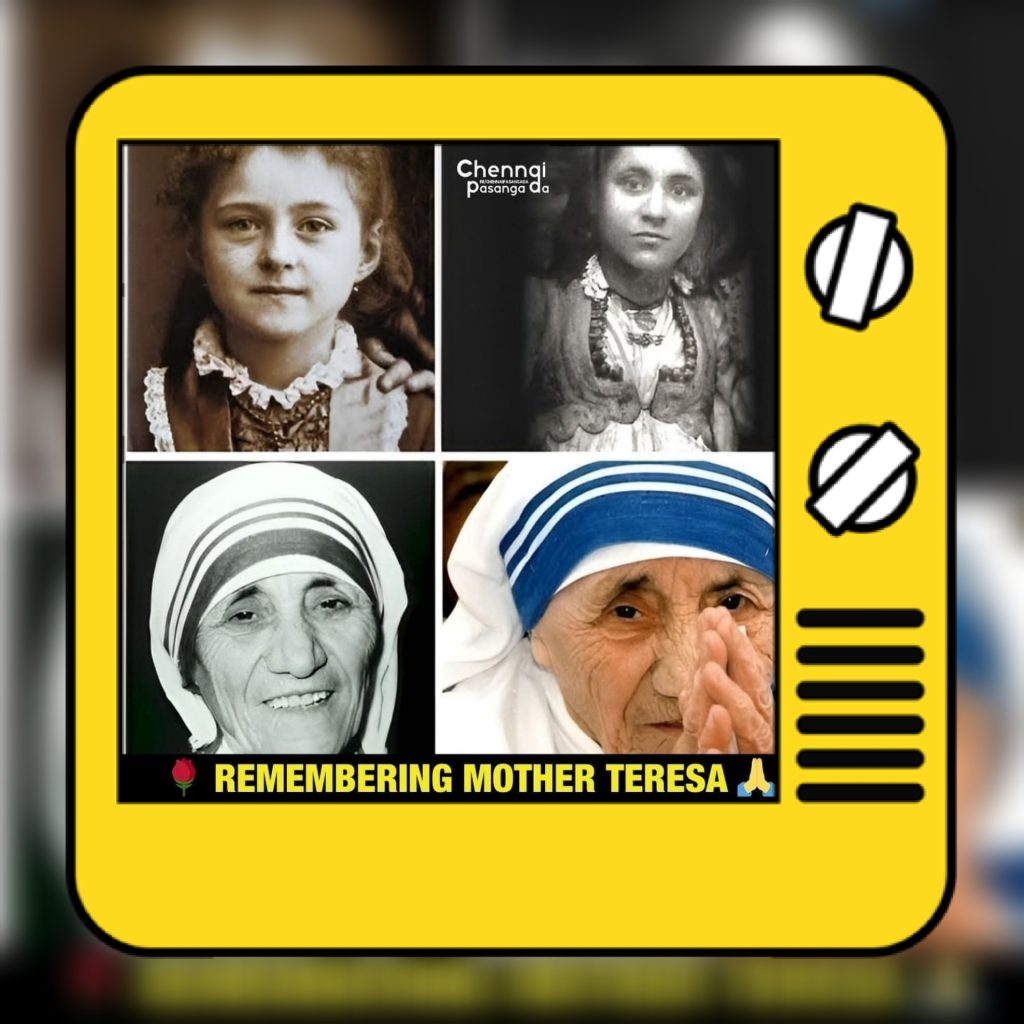
St. Mother Teresa, wss born of Albanian parents on August 26, 1910, in Skopje, now Macedonia. Founder of the Missionaries of Charity, she had the honour of becoming an Indian citizen for her noble and charitable service to the poorest of the poor.
Living in the Loreto Covent, surrounded by slums and lepers, she felt “a call within a call.” She chose to leave her teaching job in 1948 and walked the streets of Calcutta, now Kolkata, in estern India.
In her own words, she saw the face of Jesus in the suffering people, especially the sick and dying on the streets, dying unattended.
She carried them to secure places, including Kalighat Hindu Temple, and sought help from generous people. Even before her death on 5 September 1997, her Missionaries of Charity Congregation, founded in 1950, had become a world-wide set up.
Mother Teresa’s work earned her worldwide acclaim and numerous awards, including:
**Nobel Peace Prize (1979) for her work in “the struggle to overcome poverty and distress, which also constitute a threat to peace.” In her acceptance speech, she famously focused on the plight of the poor and the need for love to begin at home.
*Bharat Ratna (1980): India’s highest civilian award. *Padma Shri (1962): An Indian civilian honor for her humanitarian work.
**Pope John XXIII Peace Prize (1971): For her efforts in promoting peace and social justice.
**Presidential Medal of Freedom (1985): The highest civilian award in the United States.
Mother Teresa passed away on September 5, 1997. She was beatified in 2003 and canonized as a saint in 2016 by Pope Francis, officially becoming Saint Teresa of Calcutta.
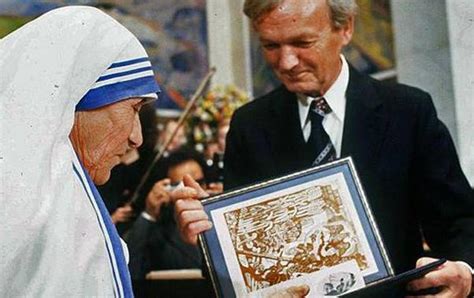
At her acceptance of the Nobel Prize in 1979 she spoke from her heart.
She began her speech by reciting the prayer of St. Francis of Assisi, “Lord, make me a channel of your peace.” This set the tone for her message, which was rooted in the idea of being an instrument of God’s love and peace.
She stressed ’Love as a Call to Action’: She spoke about how love, to be true, must “hurt.” She emphasized that love is not just a feeling, but a call to action—to serve, to give, and to sacrifice for others, just as Jesus Christ did.
She stressed the centrality of Jesus as the moving force in her. A central message of her speech was that she saw Jesus Christ in every person she served. She quoted Jesus: “Whatever you did for one of the least of these brothers and sisters of mine, you did for me.” She explained that the hungry, the naked, the homeless, and the sick are not just people in need, but Christ in disguise.
The “Poorest of the Poor” in all Nations: While her work was synonymous with the slums of Calcutta, she stressed that poverty exists everywhere, not just in terms of lack of food or shelter, but also in the form of being unwanted, unloved, and forgotten. She said that this kind of spiritual poverty is a great destroyer of peace, and that “love begins at home.”
Abortion as the “Greatest Destroyer of Peace”: In a particularly powerful and controversial moment, Mother Teresa declared that the greatest destroyer of peace in the world is abortion. She argued that if a mother can kill her own child in the womb, there is nothing to stop people from killing each other. She used the opportunity to urge people to protect the unborn.
The Power of Small Acts of Love: She emphasized that it is not about doing great things, but about doing small things with great love. She shared a story about a man who gave up smoking for a week and donated the money to her, an act she considered beautiful because it came from a place of sacrifice and love.
Mother Teresa’s speech was a deeply heartfelt and spiritual sermon that called on the world to find peace by loving and serving one another, especially those who are most marginalized and forgotten.