P. A. Chacko S. J.
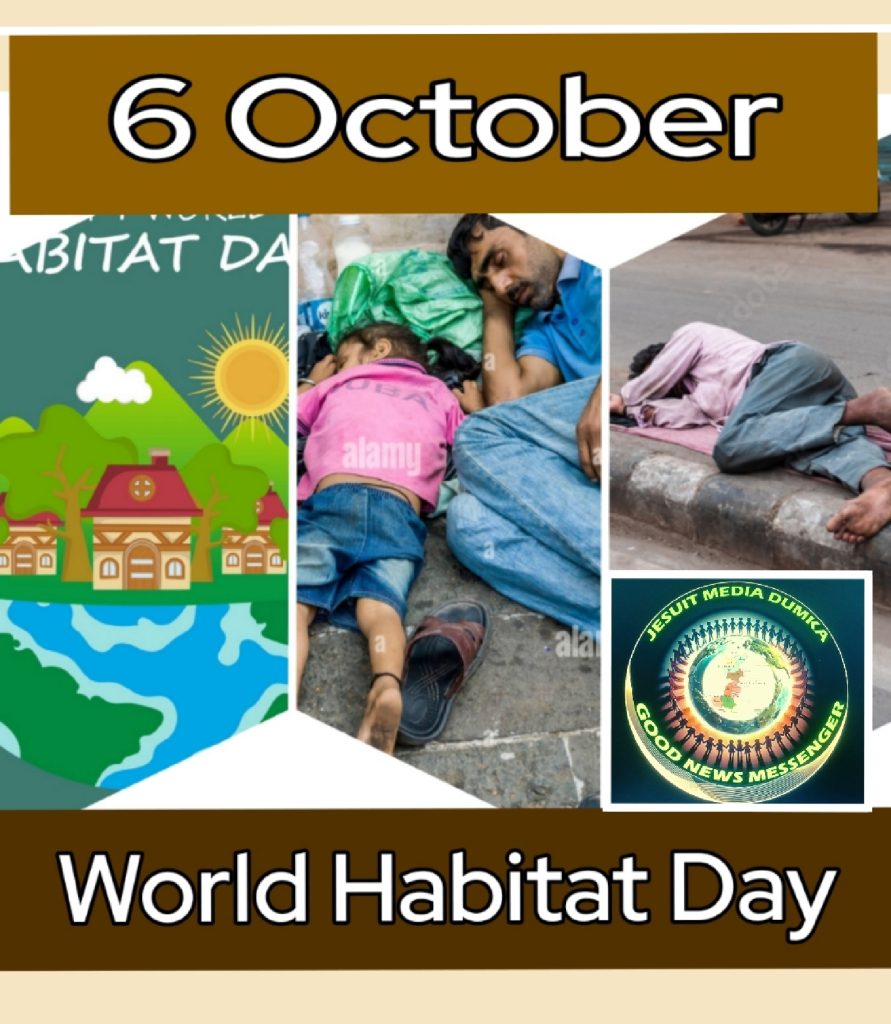
World Habitat Day is observed on the first Monday of October each year.
In 2025, the first Monday of October falls on October 6th, so the World Habitat Day will be observed on this date.
The United Nations established the day to reflect on the state of towns and cities, and on the basic right of all to adequate shelter.
Right to Shelter is a concept that emphasizes the human right to adequate housing. In the context of India, this right has been significantly developed by the judiciary.
Fundamental Right: The Supreme Court of India has consistently recognized the Right to Shelter as an integral part of the Right to Life guaranteed by Article 21 of the Constitution. It is also linked to the Right to reside and settle in any part of the territory of India under Article 19(1)(e).
Scope of the Right: The right to shelter is interpreted to mean more than just a roof over one’s head. As established in various judicial pronouncements, it includes:
Adequate living space and a safe, decent structure.
Clean and decent surroundings, sufficient light, and pure air and water.
Essential civic amenities like electricity, sanitation, and proximity to workplaces and social amenities.
It is considered essential for living a life with dignity.
Judicial Precedents: Key Supreme Court judgements that have solidified the Right to Shelter as a fundamental right include:
Olga Tellis v. Bombay Municipal Corporation (1985), which linked the right to livelihood with the right to life, impacting the right to shelter for pavement dwellers.
Shantistar Builders v. Narayan Khimalal Totame (1990), where the court held that the right to life includes the right to food, clothing, a decent environment, and a reasonable place to live.
Chameli Singh v. State of U.P. (1996), which explicitly declared the right to shelter as a fundamental right under Article 21, including the necessary infrastructure.
State Obligation: The judicial recognition places a constitutional duty on the State to make efforts to secure the right to shelter for its citizens, especially the needy, within its economic capabilities. This also implies that forced evictions without a proper survey, due process, and a plan for rehabilitation or alternate accommodation generally violate the Right to Shelter.
International Recognition: The right is also supported by international instruments like the Universal Declaration of Human Rights (UDHR) and the International Covenant on Economic, Social and Cultural Rights (ICESCR), to which India is a signatory, both of which recognize the right to adequate housing as part of the right tos an adequate standard of living.
Just providing night shelters on pavements does not exonerate the government from looking into socio-economic inequalities that dogs the nation.
Poverty alleviation is a much touted propaganda by the politicians. No government wants poverty eradication as a priority. Thereby hangs a tale. Shut the mouth of the poor and exploited masses by feeding them with instant fodder! That acts as a soothing ointment over the conscience of our rulers and that puts them to sleep and snore in the comfort of their ac, cozy apartments.